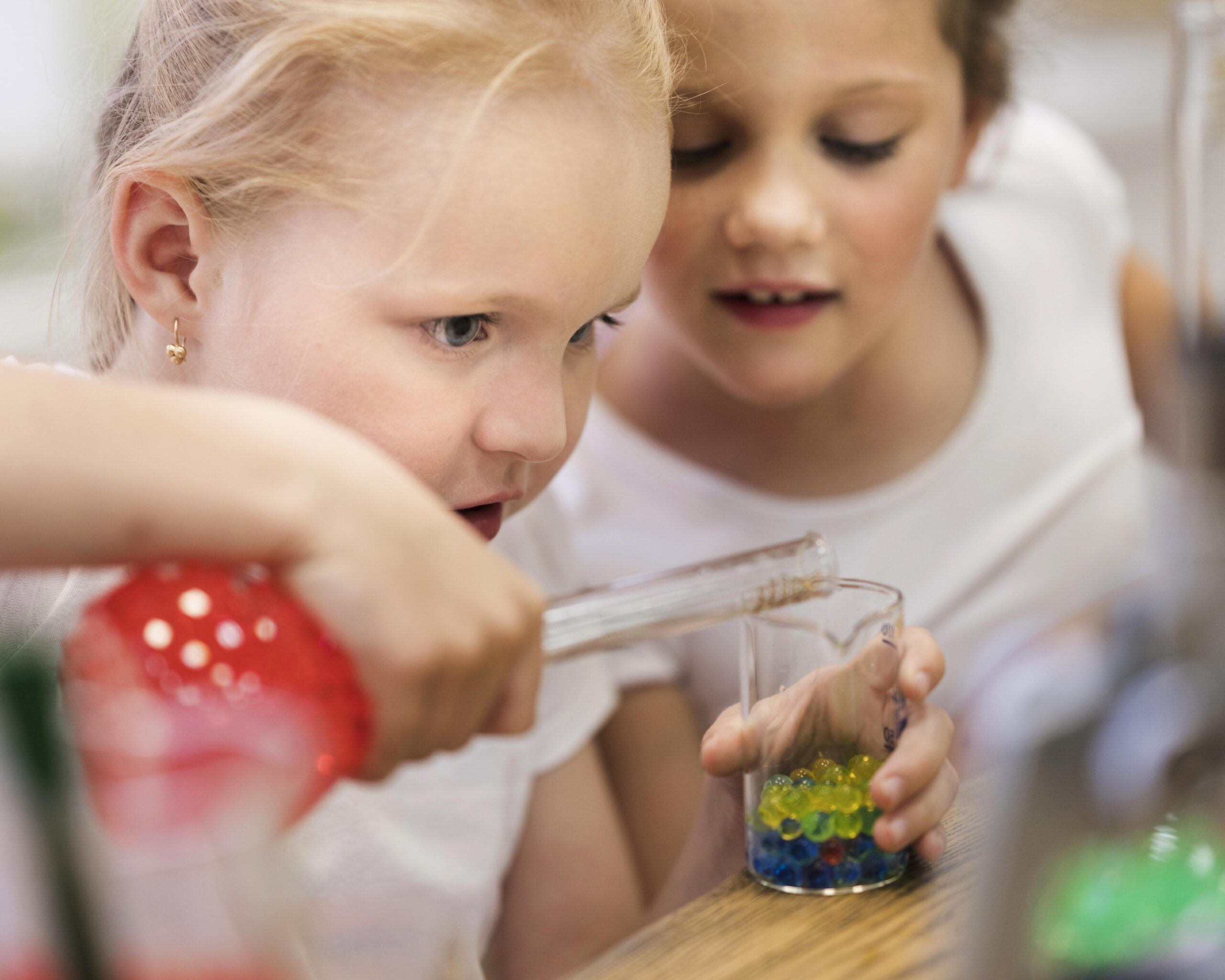
STEM activities for kids let children build, test, and observe changes. These 49 activities use mostly household supplies.
Each entry gives an age range, materials, and a test. Adults supervise throughout, handle scissors and hot water, and help with assembly. Keep small objects away from children who mouth things. Never taste experiment materials.
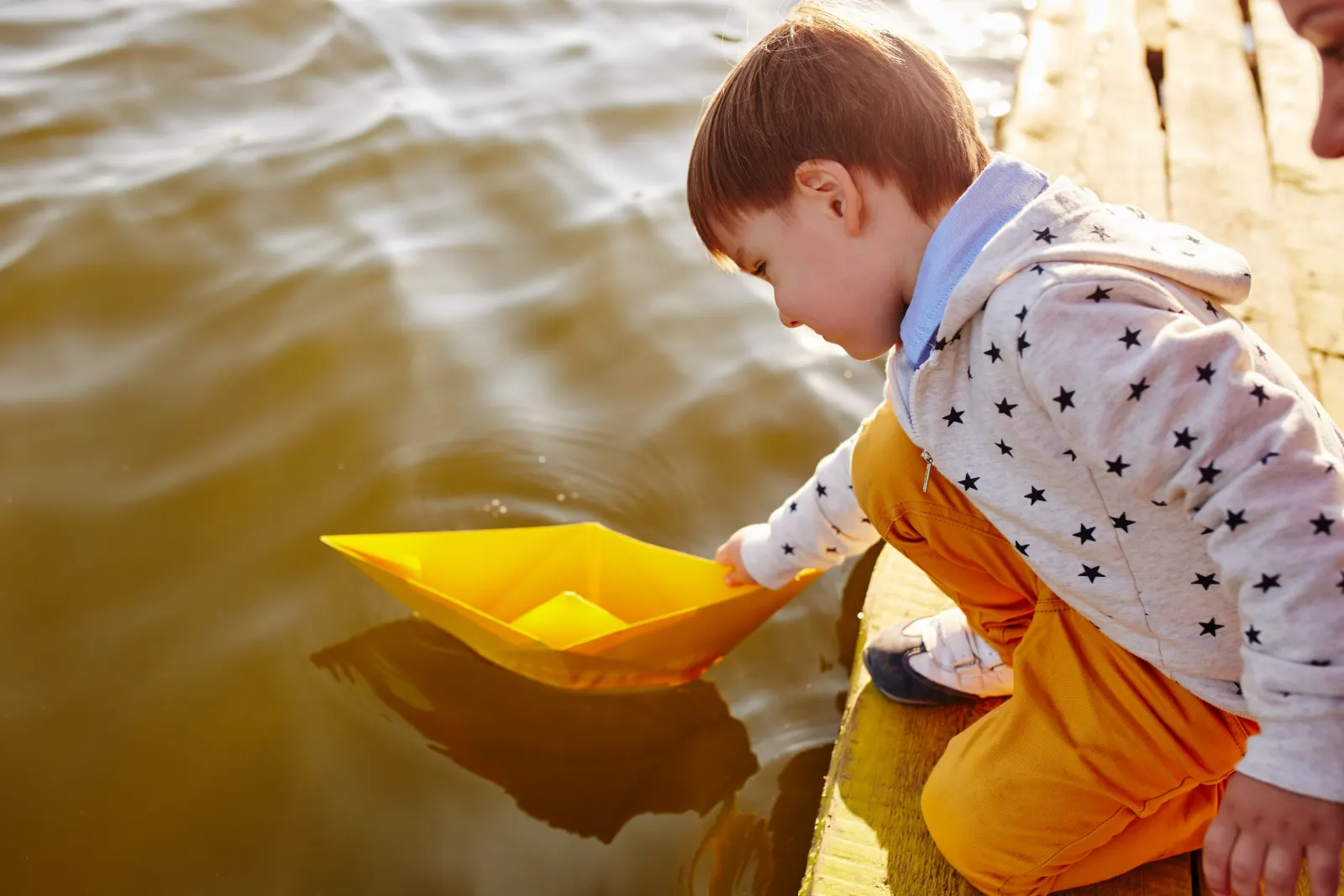
1. Foil Boats
Ages 5–10. Shape two 8-inch foil squares into different boats. Float in a basin; add pennies until sinking. Compare carrying capacity.
2. Paper Bridges
Ages 6–10. Span two books with paper; add pennies. Repeat with accordion-folded paper. Folds resist bending.
3. Bubble Mixture
Ages 4–9. Mix 1 cup water, 2 tablespoons dish soap, and 1 teaspoon glycerin. Blow through a dipped slotted spoon without touching lips.
4. Walking Water
Ages 4–9. Bridge two half-filled colored-water cups to an empty cup using paper-towel strips. Capillary action draws water along them.
5. Toy-Car Ramps
Ages 4–9. Roll a toy car down cardboard propped on books. Measure rollout; repeat onto a towel to compare friction.
6. Straw Rockets
Ages 6–10. Roll paper around a pencil; tape the seam and seal one end. Replace pencil with straw. Blow toward empty floor, never faces.
7. LED Circuit
Ages 8–12. Adult connects switched-off two-AA holder: positive → 100-ohm resistor → red LED’s long leg; short leg → negative. Use insulated clip leads. Switch on; never short terminals.
8. Paper Helicopters
Ages 6–10. Split a paper strip’s upper half; fold blades oppositely. Clip bottom with a paper clip; drop from shoulder height.
9. Coffee-Filter Colors
Ages 5–10. Draw washable black marker above a coffee filter’s bottom. Dip only its edge in water; watch ink colors separate.
10. Floating Egg
Ages 6–10. Test a raw egg in 1 cup water. Remove; dissolve 6 tablespoons salt; retest buoyancy. Wash hands.
11. Ice-Melting Surfaces
Ages 4–9. Place equal ice cubes on metal and plastic surfaces. Compare melting; metal usually transfers room heat faster.
12. Shadow Tracing
Ages 5–10. Chalk around an upright toy’s shadow. Leave toy unmoved; retrace after 30 minutes. Never stare at the Sun.
13. Leaf Rubbings
Ages 3–7. Place fallen leaves beneath paper. Rub with an unwrapped crayon’s side to reveal branching veins that transport water.
14. Seed Germination
Ages 5–10. Wrap three dry beans in damp paper towel inside a loosely covered clear container. Observe daily; discard moldy seeds.
15. Celery Waterways
Ages 5–10. Stand leafy celery overnight in water with five drops food coloring. Inspect the stalk’s water-carrying tubes, called xylem.
16. Magnetic Sorting
Ages 4–8. Predict whether a large encased magnet attracts steel, aluminum foil, or wood; test. Keep magnets away from mouths.
17. Static Paper Jump
Ages 5–9. Rub a plastic comb with wool. Hold above paper scraps without touching; electric charge attracts them.
18. Sounding Ruler
Ages 6–10. Hold a plastic ruler against a table; gently pluck overhangs of four, then two inches. Compare pitch.
19. Cup Telephone
Ages 6–10. Adult pierces two paper-cup bases. Thread six feet of string through; knot inside. Pull taut; speak softly and listen.
20. Water Xylophone
Ages 5–10. Fill three identical glasses one-quarter, halfway, and three-quarters with water. Tap gently using a wooden spoon; compare notes.
21. Index-Card Tower
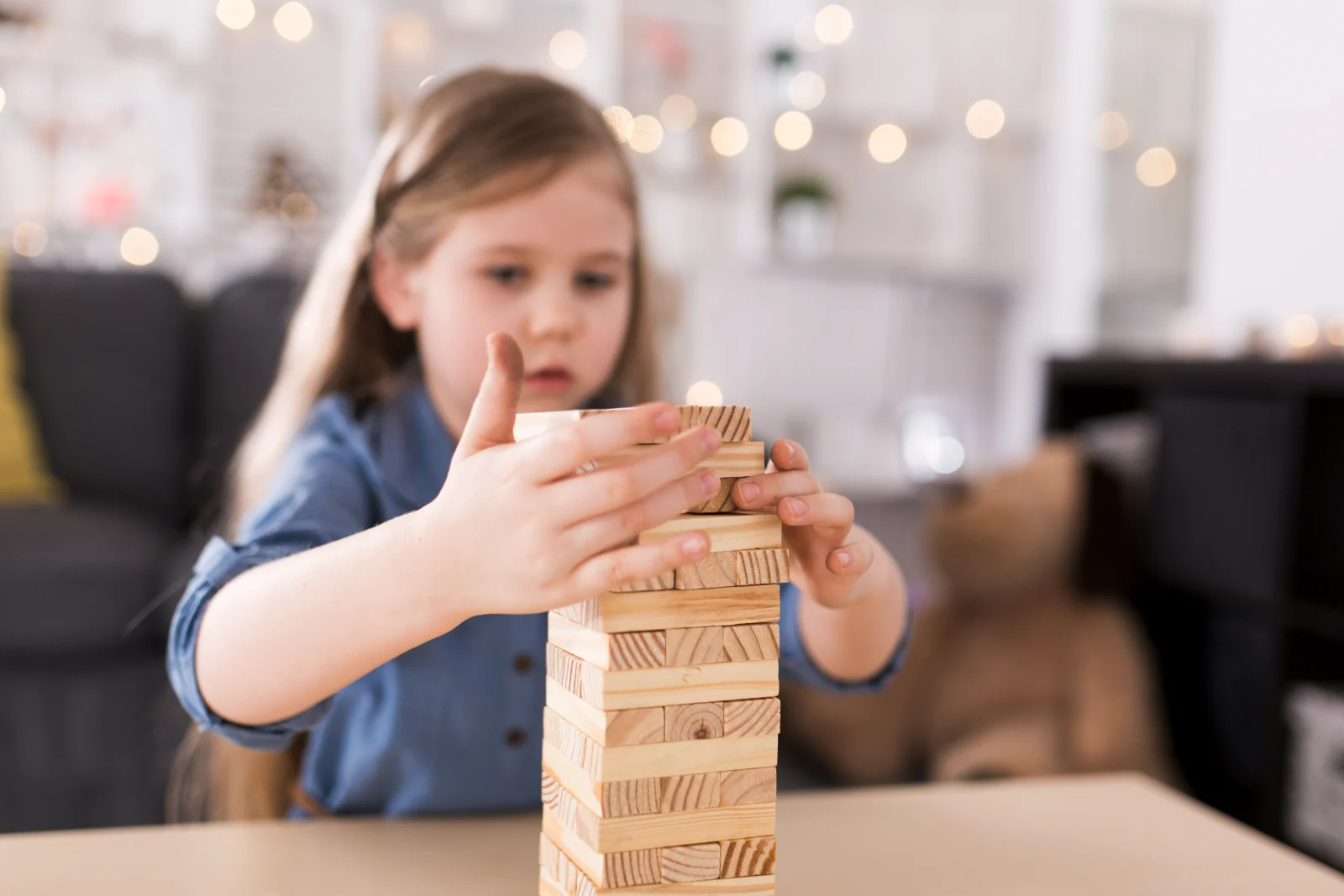
Ages 6–11. Fold 10 index cards into supports. Build a freestanding tower; measure its height after it stands for 10 seconds.
22. Cup Pyramid
Ages 4–8. Stack 10 paper cups with four across the base. Rebuild differently; compare stability.
23. Paper Chain
Ages 6–10. Cut one paper sheet into strips; tape linked loops. Measure length. Narrow strips offer more links but tear easily.
24. Marble Maze
Ages 6–10. Fold six paper strips into walls; tape inside a box lid. Tilt to guide a marble downhill.
25. Spoon Catapult
Ages 7–11. Tape down a cardboard tube; balance a spoon across it. Load a pom-pom; press opposite end toward empty floor.
26. Balance Beam
Ages 5–9. Balance a ruler across a pencil. Position six identical coins at different distances; explore how distance affects balance.
27. Rolling Cylinders
Ages 5–10. Release a cardboard tube and unopened food can down a low cardboard ramp without pushing. Compare rolling speeds.
28. Shape Hunt
Ages 3–7. Draw a circle and rectangle with crayon. Find indoor examples; tally matches. Distinguish flat shapes from solid objects.
29. Mirror Symmetry
Ages 5–9. Draw half a heart on paper. Stand an unbreakable mirror along its centerline; reflection supplies the matching half.
30. Water-Drop Dome
Ages 5–10. Put a penny on a plate. Use a dropper; count water drops before spilling. Surface tension supports the dome.
31. Pepper And Soap
Ages 5–9. Sprinkle pepper over a water-filled bowl. Touch a soap drop to its center; changing surface tension moves pepper outward.
32. Oil And Water
Ages 4–9. Seal ½ cup water and 2 tablespoons vegetable oil in a clear jar. Shake; watch separate layers return.
33. Raisin Elevator
Ages 5–10. Drop three raisins into fresh sparkling water. Watch attached bubbles lift them, then escape.
34. Vinegar Fizz
Ages 5–10. On a tray, add 2 tablespoons vinegar to 1 teaspoon baking soda in an open cup. Never seal this gas-producing reaction.
35. Oobleck
Ages 4–10. Mix 1 cup cornstarch with ½ cup water. Squeeze, then release; compare resistance. Trash leftovers, never drain them.
36. Salt Crystals
Ages 7–11. Adult stirs 3 tablespoons salt into ¼ cup hot water. Pour into a shallow dish; observe crystals as water evaporates.
37. Paper Airplanes
Ages 6–11. Fold paper lengthwise, upper corners inward, then matching wings. Launch toward clear floor; measure distance. Adjust wing tips between trials.
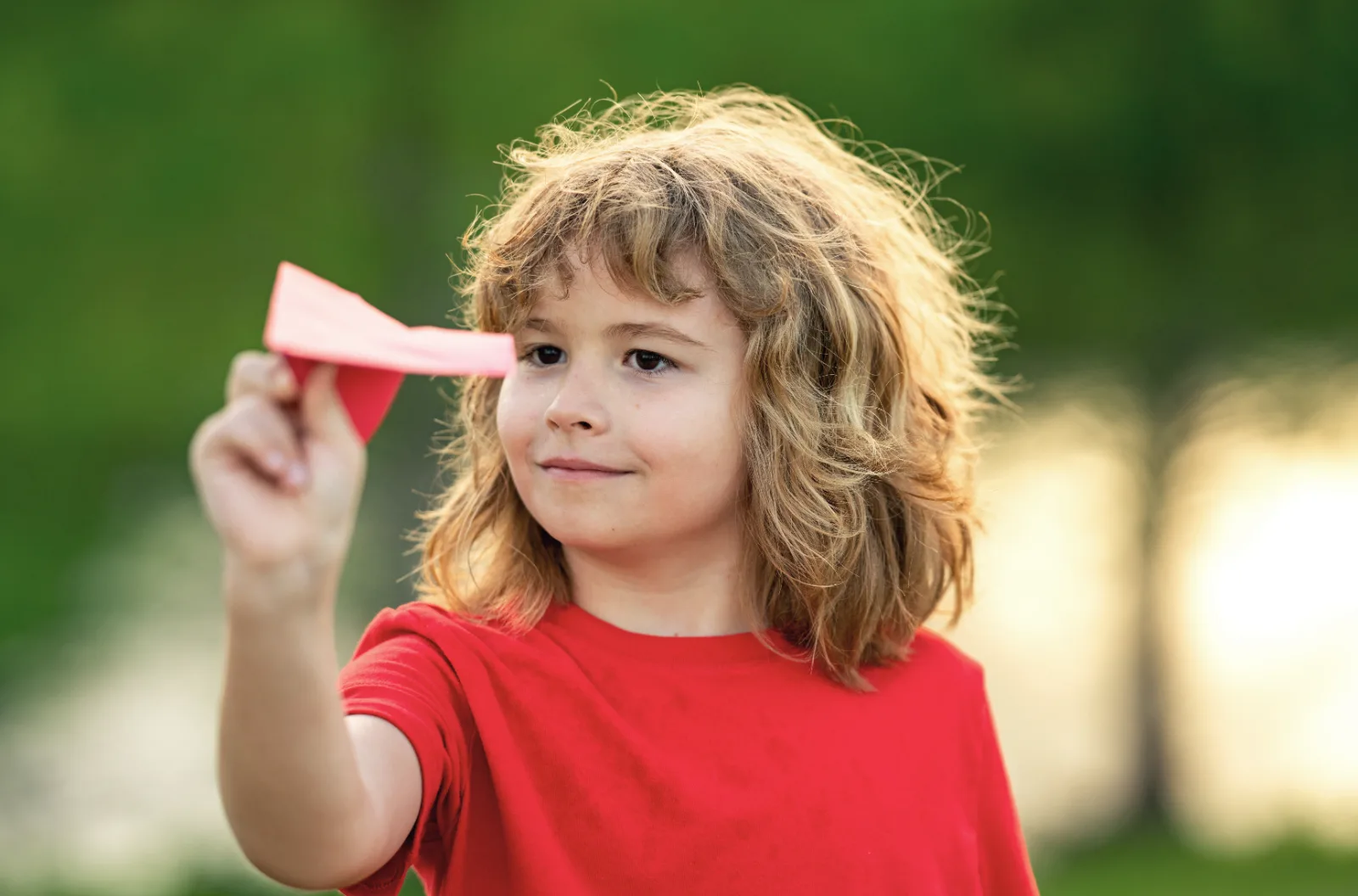
38. Parachute Drop
Ages 6–10. Tape four twelve-inch strings to tissue corners; tie ends around a paper clip. Drop from shoulder height; observe air resistance.
39. Egg-Carton Sort
Ages 3–6. Sort 12 large blocks into a clean egg carton by color. Rearrange by shape to practice changing classification rules.
40. Block Patterns
Ages 3–7. Use six red and six blue blocks for alternating rows. Leave gaps for children to predict and fill.
41. Measuring Footsteps
Ages 5–9. Measure and tape-mark a six-foot indoor path. Count walking steps across it; compare counts from different stride lengths.
42. Pendulum Timing
Ages 7–11. Adult securely suspends a large washer from two-foot string. Time 10 small swings; shorten and repeat. Keep swing area clear.
43. Paper Windmill
Ages 6–10. Cut diagonal slits halfway toward a paper square’s center. Fold alternating corners inward; drop above clear floor and watch spinning.
44. Rain Gauge
Ages 6–10. Mark quarter-inch intervals from a straight-sided plastic cup’s inside bottom. Set outdoors away from roof runoff; measure rainfall.
45. Soil Settling
Ages 6–10. Seal ¼ cup garden soil and 1 cup water in a jar; shake. Observe settling for an hour. Wash hands.
46. Water Filter Model
Ages 7–11. Line a funnel with a coffee filter over a cup. Pour soil-water through. Filtered water remains unsafe to drink.
47. Insulated Ice
Ages 6–10. Put equal ice cubes in separate bowls; wrap one in a washcloth. Compare after 20 minutes to explore insulation.
48. Unplugged Coding
Ages 5–9. Arrange nine paper squares into a floor grid. Give forward-and-turn instructions for a toy; debug incorrect instructions.
49. Spoonful Estimates
Ages 5–9. Predict tablespoonfuls needed to fill a cup. Fill and count over a bowl; compare your estimate with the measurement.
Key Takeaways
Choose an age-appropriate test. Change one variable per comparison; measure results and allow redesign.
Frequently Asked Questions
What are some fun and engaging STEM activities for a 3-to-5-year-old child?
Leaf rubbings and block patterns suit preschoolers. Favor large materials.
What are some 30-minute STEM activities for elementary school students?
Foil boats and paper bridges allow building and redesign within 30 minutes.
What are STEM activities?
STEM activities for kids investigate how things work through science, technology, engineering, and mathematics.
How can you make a STEM challenge harder without buying more supplies?
Build the index-card tower with fewer cards while keeping the same success measure.
How can children record results before they can write?
Use drawings or blocks to represent successful tests; adults can label spoken explanations.
Start With One Testable Question
Ask for a prediction: Which boat shape carries more pennies? Use equal foil pieces, record outcomes, and let the result guide another attempt.