
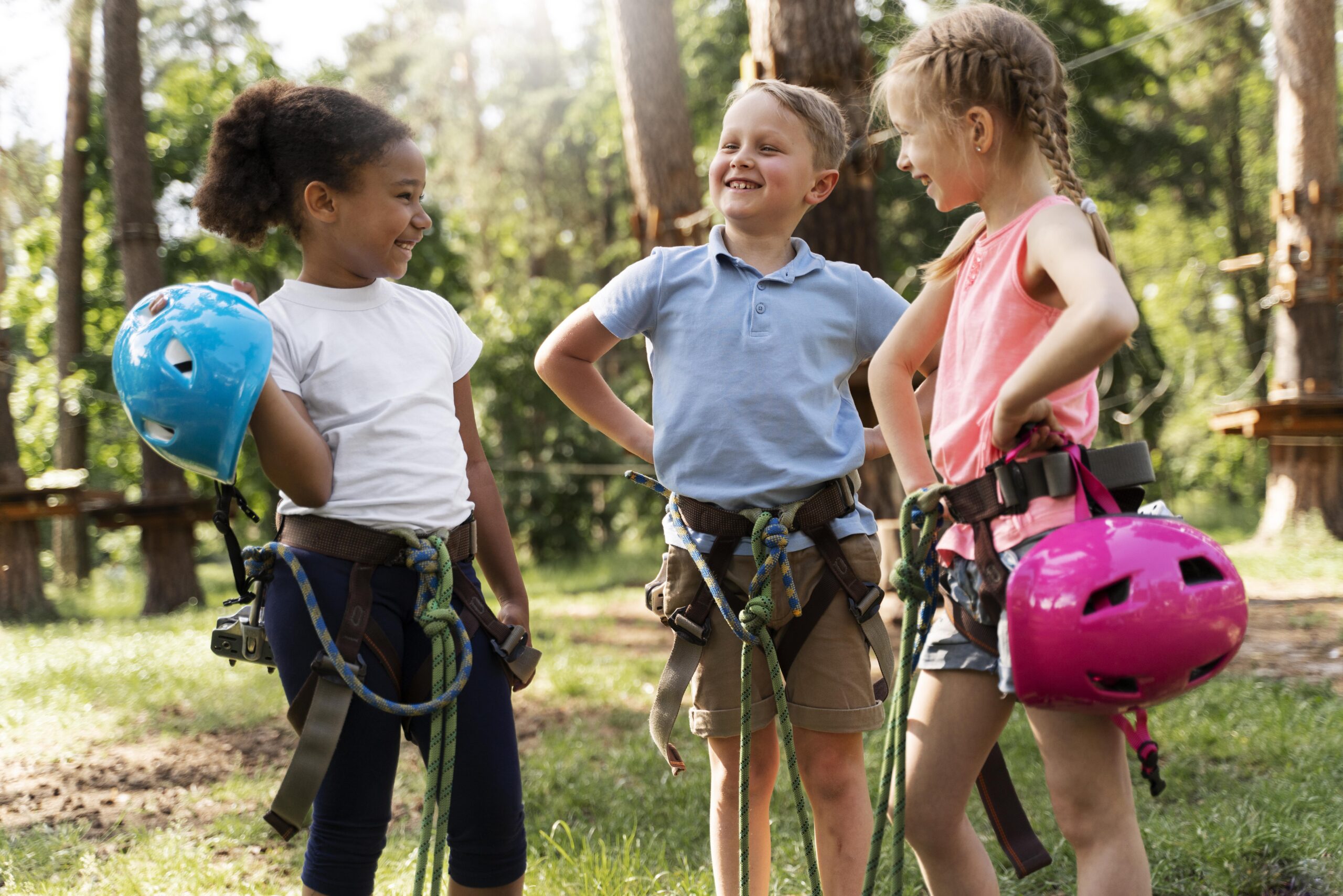
Outdoor activities for kids can be as simple as a sensory walk or as involved as a child-designed obstacle course. The best choice fits your available space and lets each child take on a comfortable challenge. These five outside activities range from toddler-friendly noticing games to nature storytelling for tweens. Each includes materials, suggested setup and play times, and the space you’ll need; treat the times as flexible planning windows.
Outdoor activities for kids require a clear boundary away from traffic and close supervision near roads or water. Bring drinking water and use sun protection, including sunscreen and shade breaks. Leave unknown plants and fungi untouched, and keep small twigs and other choking hazards away from toddlers. Age suggestions below are starting points, not expectations: a child can watch first, change the rules, or stop when they’ve had enough.
1. Take a Sensory Walk
Materials: None required; optional paper and crayons for recording discoveries. Setup: About 2 minutes to choose your route. Play: About 10–20 minutes. Space: A short sidewalk route, garden path, or accessible park loop.
A sensory walk gives children something specific to notice without requiring them to collect anything. Pause near a tree and ask what they hear, then move somewhere with a different surface underfoot. Keep listening stops away from traffic crossings so children can focus without losing track of their surroundings. For toddlers, pointing at something yellow may be enough.
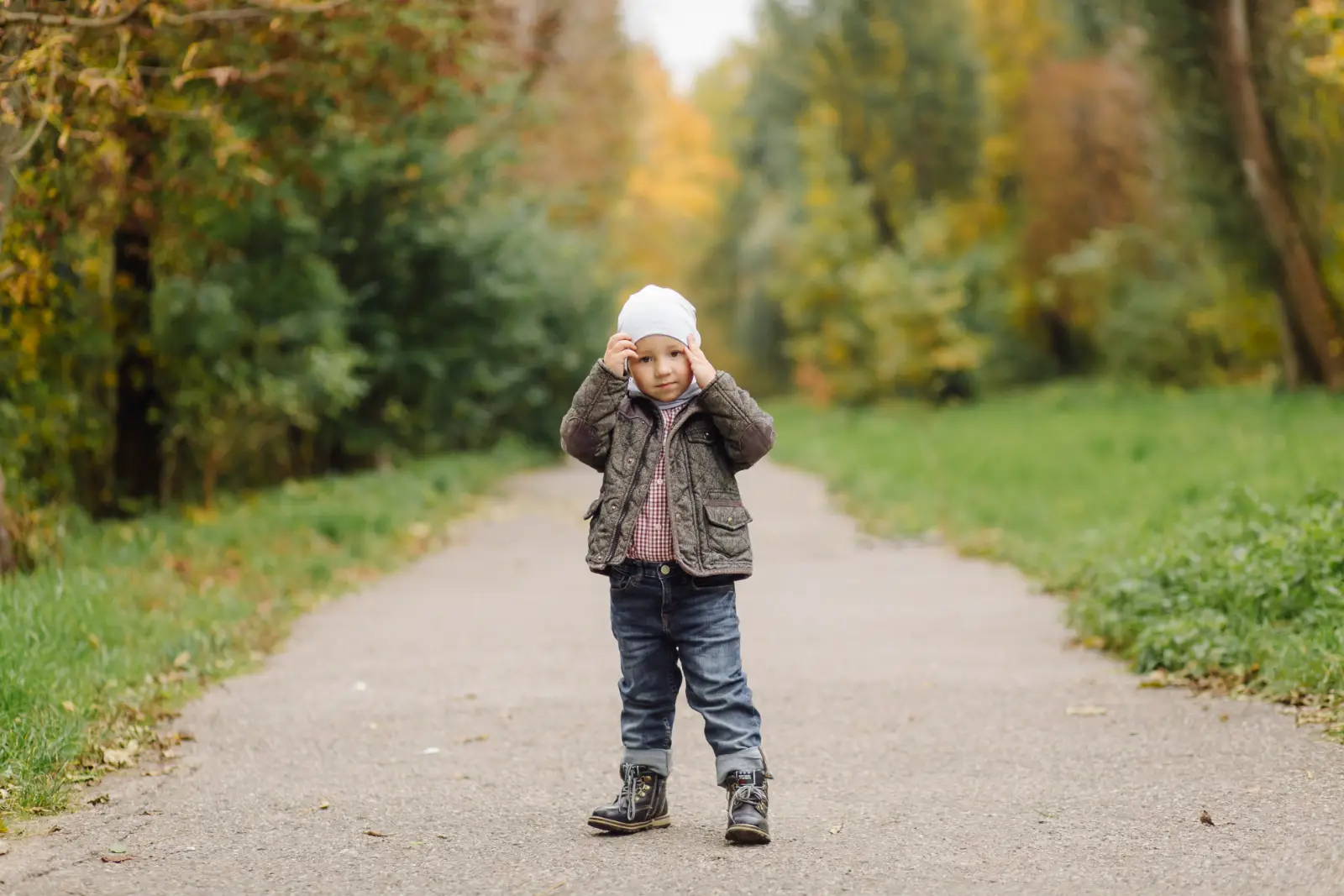
That simple prompt can become I Spy for children who enjoy guessing. Describe something visible by its color or shape, and let them identify it; younger players can point instead of naming it. An older child might compare the sounds at two stops and sketch where each came from. These nature activities for kids work without touching unfamiliar objects, and you can repeat the same route to notice what changes after rain or when leaves fall.
2. Make Patterns With Fallen Sticks
Materials: A few large, smooth fallen sticks, plus optional chalk. Setup: About 5 minutes for an adult to select and inspect the sticks. Play: About 10–20 minutes. Space: A clear patch of ground where sticks won’t block a walkway.
Use fallen sticks to make a line, then invite children to change it into a zigzag or a letter. Choose pieces without sharp points or splinters, and leave attached branches on trees. For a toddler, the adult handles the sticks while the child points to where the next one should go. Children who still mouth objects should not handle loose sticks.
Children ready to handle them can sort sticks by length or copy a simple pattern. A 5-year-old who likes counting could decide how many pieces a square needs, without turning the game into a lesson.
For older children, add a ground-level version of Pick-Up Sticks: overlap the pieces, then remove one without shifting its neighbors. Keep sticks on the ground, with no throwing or swordplay. This is one of the outdoor activities for kids at home that needs little equipment, provided you have suitable fallen material and room to use it safely.
3. Go on a Scavenger Hunt
Materials: Paper and crayons or a reusable picture card; an optional clipboard. Setup: About 5–10 minutes. Play: About 15–30 minutes. Space: A yard or a clearly bounded section of a park.
Make a short hunt based on things children can observe where you are. A picture of a leaf works for a nonreader; “find a leaf with a jagged edge” gives a more experienced observer a narrower task. Ask children to point, draw, or photograph their finds instead of bringing them back. The hunt should reward noticing, not speed.
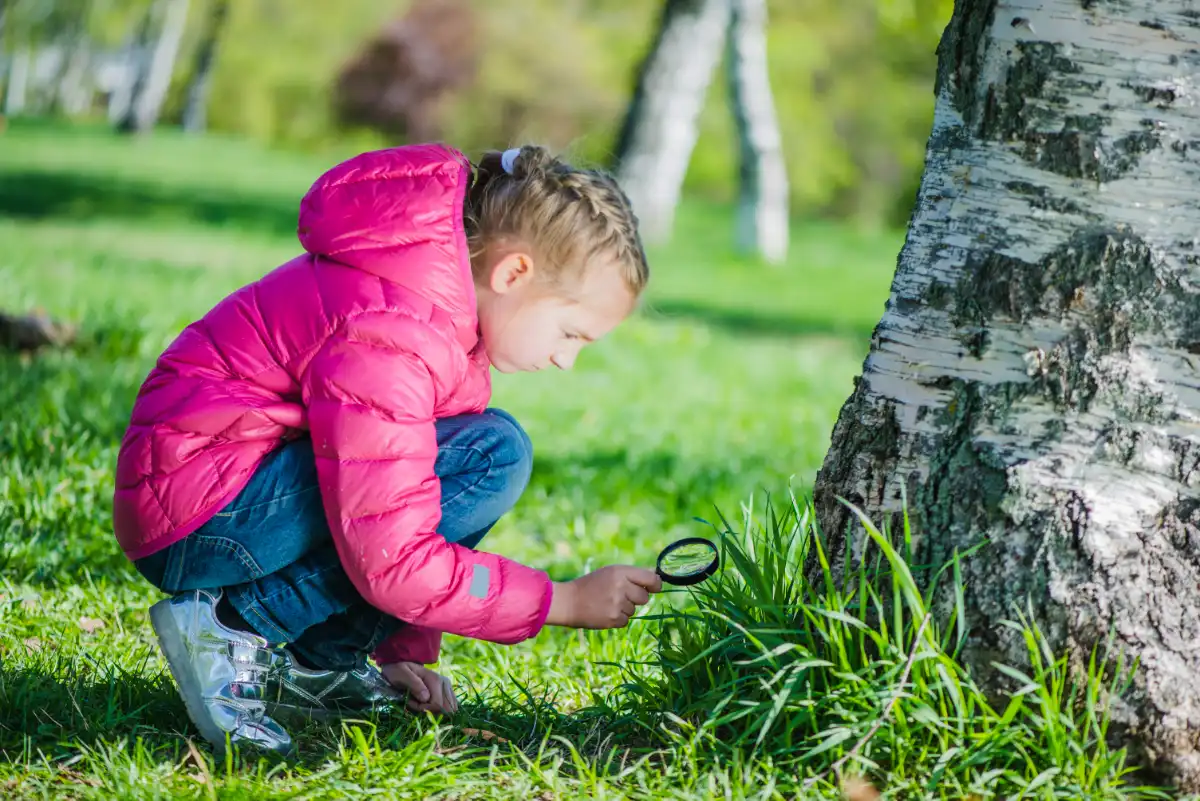
For a sensory scavenger hunt, include a sound prompt such as “something rustling” alongside visual clues. Avoid taste prompts and tasks that require touching unknown plants. Children who prefer a quieter game can use Backyard Bingo: draw a small grid of things likely to be visible and mark each square when spotted.
These are fun outside activities for kids who like a goal, but the goal can change. If everyone becomes interested in one bird, pause the card. An older sibling can write clues while a younger child chooses which clue the group tackles next.
4. Build a Chalk Obstacle Course
Materials: Sidewalk chalk and optional familiar toys, such as a ball or hoop. Setup: About 5–10 minutes. Play: About 15–30 minutes. Space: A flat, dry patio or paved play area separated from moving vehicles.
Draw a course with a clear beginning and end. A wavy line can mean “follow this path,” while a large circle can mean “stop here and turn around.” Test the route yourself for slippery patches and enough stopping room. Keep it away from driveway entrances, and leave public sidewalks open for other people.
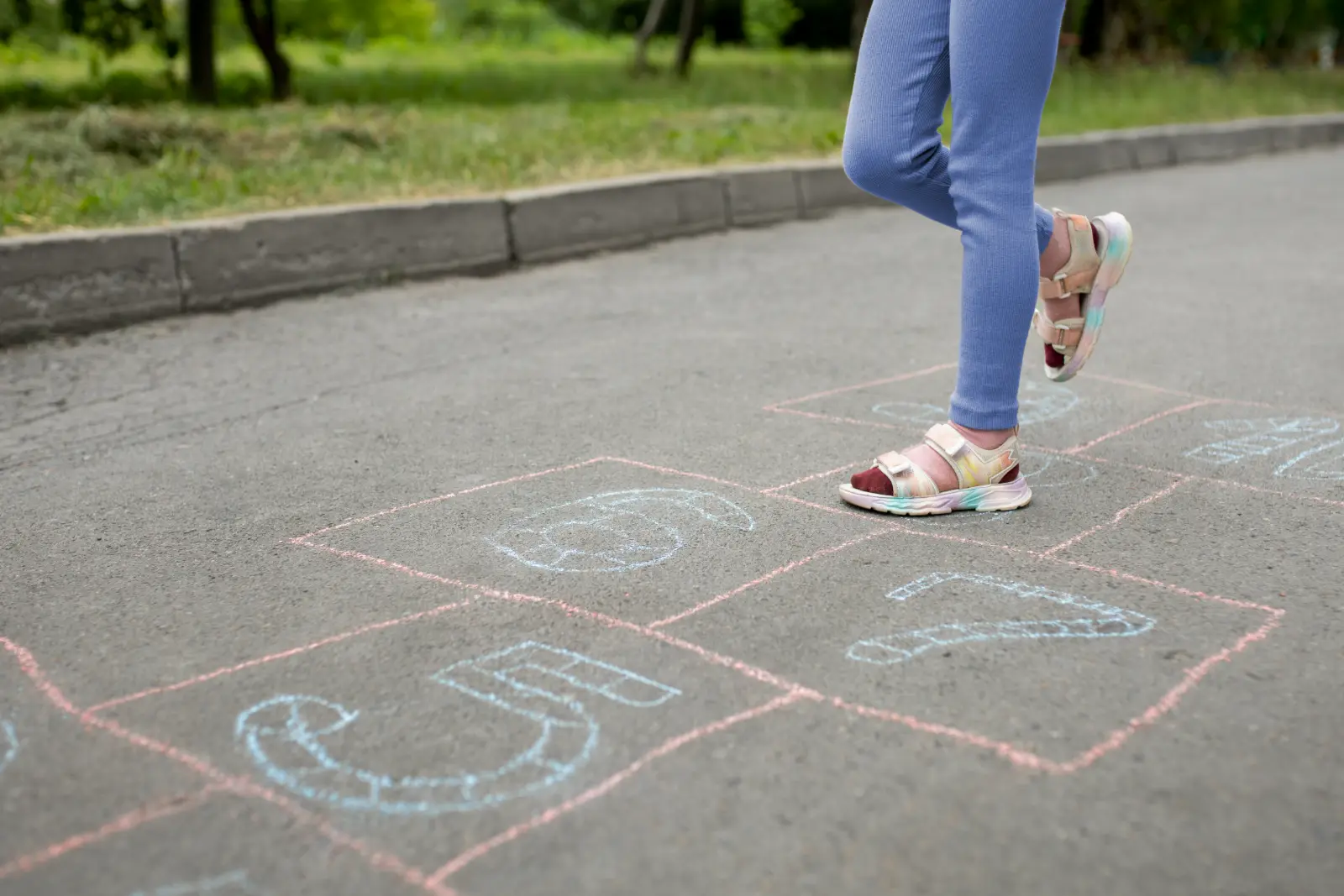
The same chalk obstacle course can offer different movements. A toddler might walk between two lines; another child could hop along one line or travel sideways. For a child using a mobility device, make the route wide enough and replace jumping with a comfortable movement or an action done while stationary.
Let children redesign a section once they understand the route. Adding a ball roll toward a chalk target changes the challenge without making the course higher or faster. This kind of outdoor fun for kids doesn’t need a race: the satisfying part can be inventing a route that somebody else can follow.
5. Turn a Nature Walk Into a Local Story
Materials: A notebook and pencil; an optional camera. Setup: About 5–10 minutes to choose a destination and a question. Play: Set aside 30 minutes to an hour. Space: A familiar neighborhood route or public park with an interesting feature.
Choose one feature to investigate, such as a large tree beside a path or a creek crossed by a bridge. Ask children what they can observe directly, then what questions those observations raise. A tree’s exposed roots might prompt a sketch of how the path bends around it. Record what is visible without guessing the tree’s age.
For a tween, including a 12-year-old who enjoys investigating, add local history through a public interpretive sign or an existing historical marker. Write down the name or date it gives, then discuss how the place looks now. Keep documented information separate from guesses.
Those notes can become a short story afterward. Label invented parts as fiction, and let younger siblings contribute a drawing or dictate a sentence. These family outdoor activities give children different jobs within one outing, without requiring everyone to write or walk at the same pace.
Key Takeaways
- Match the challenge to the child rather than treating age groups as strict limits.
- Sensory walks and twig games give younger children simple ways to explore.
- Scavenger hunts can accommodate different ages through different clues.
- Chalk and existing toys can supply an adaptable obstacle course.
- Older children can connect nature observations with storytelling and local history.
Frequently Asked Questions
What are 20 outdoor games?
Ten options are I Spy, Backyard Bingo, tag, hide-and-seek, hopscotch, freeze tag, Red Light, Green Light, Simon Says, Follow the Leader, and Mother May I? Ten more are capture the flag, kickball, four square, catch, ring toss, beanbag toss, flashlight tag, a scavenger hunt, an obstacle course, and Pick-Up Sticks with suitable fallen sticks.
What are some fun outdoor projects for kids?
Children can keep a weather journal, draw a map of their yard, or make a temporary ground picture with fallen leaves. A container garden is another option when an adult supplies known, appropriate plants and handles any fertilizer according to its label.
How can siblings of different ages join the same outdoor activity?
Give them different roles within one shared task: a younger child can find a color while an older sibling records the discovery. Let each child choose a role sometimes, so the older one isn’t always responsible for helping.
Which of these activities work in a small yard?
The stick-pattern game and Backyard Bingo can stay within a small patch of ground. A sensory walk can become a stationary observation game, while a compact chalk course needs only enough paved space for safe movement.
How can children investigate nature without taking plants or animals home?
Use sketches, photographs, or dictated notes to record discoveries where they are. Watch animals from a distance without feeding or handling them, and leave nests and shelters undisturbed.
Pick One Activity and Head Outside
Choose according to what you have today. With no supplies, take the sensory walk and let your child choose the first thing to notice. If you have chalk and a clear paved area, draw a short route before adding more challenges.
Keep the first attempt manageable. You don’t need to fill the whole play window or finish every clue for the activity to count. If a child wants to repeat one part, stay with it; if the format isn’t working, simplify it. A younger child can point while a sibling records, and both can contribute to the same outing. Use what holds their attention today to choose what you do outside next time.